
Share:
World Series of Poker (WSOP) – Video Highlights & Full Series
The WSOP is a #1 poker series of tournaments that lasts about six weeks, with 2–3 new events starting nearly every day. Buy-ins usually range from $1k to $10k, though some events are cheaper and some are more expensive. However, when people say someone “won the WSOP”, they usually mean the $10k No Limit Hold’em Main Event. This event usually starts around July 2–4 most years, attracts huge numbers of players, and is considered the most important tournament of the year in terms of prestige, media attention, and public recognition.
303 episodes (338 hours 35 minutes)
-
WSOP 2025 Final Table Preview: Who Wins Poker’s Biggest Prize?1:29:58
-
WSOP 2025 Main Event | Final Table - DAY 1 - FINAL FIVE!3:27:11
-
World Series of Poker Main Event 2025 FINAL TABLE HIGHLIGHTS! $10,000,000 FIRST PRIZE1:06:06
-
CRAZIEST Final Table EVER?! Top 5 Hands of 2025 WSOP Main Event!0:20:35
-
World Series of Poker 2025 Main Event Final Table [EVERY BIG HAND!]1:55:30
-
This Hand Changed EVERYTHING! BIGGEST POT of the 2025 WSOP Main Event!0:04:17
-
WSOP 2025 Final Table Recap: Mizrachi’s Run for $10M0:53:58
-
Michael Mizrachi Wins 2025 WSOP Main Event for $10,000,000!0:07:01
-
How He Won $10,000,000! [EVERY HAND REVEALED]0:58:02
-
From Grinder to Greatness: Mizrachi Wins WSOP Main Event for $10M0:59:30
-
First Woman in 3 Decades to Reach the WSOP Main Event Final Table: Leo Margets0:07:35
-
The SICKEST COMEBACK in WSOP Main Event HISTORY?!0:06:21
-
Relive Michael Mizrachi's Incredible 2025 WSOP Main Event Story0:22:12
-
2025 WSOP Main Event | Day 1A with Martin Kabrhel, Jason Koon & Kevin Martin0:32:51
-
Daniel Negreanu & Phil Hellmuth at WSOP Main Event! Day 1B Highlights!0:31:18
-
WSOP Main Event | Day 1C with Viktor Blom, Michael Addamo & Erick Lindgren0:25:35
-
WSOP Main Event | Day 1D with Jared Bleznick, Ben Lamb & Darren Elias0:28:25
-
Daniel Negreanu & Phil Hellmuth Return on Day 2ABC of WSOP Main Event!0:40:31
-
WSOP 2025 Main Event | Day 2D with Liv Boeree, Sean Perry & Santhosh Suvarna0:30:39
-
Daniel Negreanu, Phil Hellmuth, Doug Polk & Michael Mizrachi Headline WSOP Main Event Day 30:55:56
-
WSOP Main Event Day 4: Money Bubble Madness & Big Names Surging!0:45:49
-
WSOP Main Event Day 5: Big Names Fall as New Heroes Surge0:43:12
-
WSOP Main Event Day 6 with Will Kassouf, Michael Mizrachi & Leo Margets!0:48:57
-
WSOP Main Event Day 7 - Maximum Will Kassouf Drama & Epic Showdowns!0:35:54
-
2025 WSOP Main Event Day 8 | WHO MAKES THE FINAL TABLE?!0:58:51
-
WSOP 2025 Final Table Set: Wasnock Leads, Margets Makes History1:01:28
-
The BIGGEST Tournament of ALL-TIME?! $300 into $420,680 Prize!0:17:40
-
2025 WSOP Ladies Championship Highlights! $184,094 Up Top!0:38:26
-
Phil Hellmuth Hunts 18th Bracelet at $50K Poker Players Championship!0:32:50
-
WSOP $50K Poker Players Championship with Michael Mizrachi & Bryn Kenney!0:47:09
-
Michael Mizrachi Chases Record-Breaking Win at $50K Players Championship!0:30:40
-
2025 WSOP Millionaire Maker Final Table! Who Will Win $1,255,180?!0:38:57
-
2025 WSOP $1,000 Battle of Ages Highlights! $335,390 to the Champion!0:18:44
-
2025 WSOP $1,000 Battle of Ages Final Table! $335,390 at Stake!0:27:56
-
WSOP $50K PLO High Roller Highlights! $2,146,414 On the Line!0:34:20
-
Seniors Chase $653,839 Top Prize at the World Series of Poker!0:31:31
-
WSOP $25K Pot-Limit Omaha High Roller! $2,292,155 Up Top!0:24:26
-
Phil Ivey Hunts 12th WSOP Bracelet at $25,000 PLO High Roller!0:46:05
-
WSOP $1,500 Monster Stack Highlights! $1,204,457 to the Champion!0:24:28
-
Daniel Negreanu, Phil Ivey & Martin Kabrhel at WSOP $250K Super High Roller!0:26:09
-
WSOP $250K Super High Roller Highlights! $4,752,551 First-Place Prize!0:37:34
-
Phil Ivey, Adrian Mateos & Isaac Haxton at WSOP $100K High Roller!0:33:00
-
WSOP $100K High Roller with Isaac Haxton, Andrew Lichtenberger & Ben Heath0:36:20
-
WSOP $10K Limit Hold'em Final Table with Viktor Blom & Anthony Zinno0:22:09
-
2025 WSOP $50K High Roller with Jason Koon, Andrew Lichtenberger & Ben Tollerene0:36:31
-
Turning $500 to $542,540 at WSOP $500 Colossus Final Table!0:43:11
-
Brad Owen, Erik Seidel & Masato Yokosawa at WSOP $25K High Roller!0:24:29
-
Masato Yokosawa & Joe McKeehen at WSOP $25K High Roller Final Table0:33:34
-
Chris Moorman, Jared Bleznick & Landon Tice at WSOP $25K 6-Max Final Table0:42:25
-
2025 WSOP $1,500 Shootout Highlights0:34:17
-
Ben Lamb & Lou Garza Battle at WSOP $25K NLH / PLO High Roller!0:32:15
-
2025 WSOP $1,500 No-Limit Hold'em 6-Max Highlights0:53:02
-
Daniel Negreanu Chases 8th WSOP Bracelet Highlights!0:22:06
-
2025 WSOP $1,000 Mystery Millions Highlights0:31:26
-
2025 WSOP $25K Heads-Up Championship Highlights0:32:57
-
Chase for the Bracelet! $582,008 Prize in WSOP $5K No-Limit Hold'em!0:38:15
-
Good or Bad for Poker? | Martin Kabrhel in the 2025 WSOP $250K Super High Roller0:20:09
-
HIGHLIGHTS | $100K PLO High Roller Final Table0:06:22
-
Back-to-Back Champion. Is She the Best Female Player? | 2025 WSOP Ladies Championship0:16:46
-
HIGHLIGHTS | $50K PLO High Roller Final Table0:09:19
-
Phil Ivey Chasing His 12th Bracelet | 2025 WSOP $25K PLO High Roller0:05:43
-
HIGHLIGHTS | $250K Super High Roller Final Table0:07:45
-
HIGHLIGHTS | $1,500 No-Limit Hold'em0:09:27
-
HIGHLIGHTS | $5K No-Limit Hold’em Highlights0:06:24
-
HIGHLIGHTS | $1,000 Mystery Millions Final Table0:02:57
-
Can He Win Again? | Event #9: $10,000 Omaha Hi-Lo Championship0:05:35
-
Aces CRACKED! Top 5 SICKEST Beats of the 2025 WSOP0:09:15
-
Top 10 LUCKIEST MOMENTS of the 2025 WSOP!0:26:27
-
Top 10 CRAZIEST BLUFFS of the 2025 WSOP!0:36:49
-
INSANE Soul Reads! Top 10 HERO CALLS of the 2025 WSOP!0:32:37
-
Top 5 WORST BAD BEATS of the 2025 WSOP!0:12:06
-
Top 10 SICKEST COOLERS of the 2025 WSOP!0:26:57
-
BIGGEST MOMENTS FROM WSOP 20250:12:00
-
Psychological Strategy Or Unethical Violation | Martin Kabrhel & Will Kassouf0:13:17
-
WSOP Main Event Final Table Day 11:28:15
-
WSOP Main Event Final Table Day 2 ft Niklas Astedt, Jonathan Tamayo & Jordan Griff0:25:41
-
WSOP Main Event 2024 FINAL TABLE - Who Makes The Final Three?!0:44:38
-
WSOP Main Event 2024 FINAL TABLE - A Champion is Crowned0:53:00
-
World Series of Poker Main Event 2024 - Every Hero Call ft Kristen Foxen0:30:27
-
The Hand That Won Jonathan Tamayo $10,000,000 in the WSOP Main Event!0:04:17
-
TOP 5 CRAZIEST Poker Hands in 2024 WSOP Day 10:12:50
-
WSOP Main Event 2024 - Crazy Hands on Day 1a ft Michael Mizrachi & Daniel Hachem0:13:07
-
WSOP Main Event Day 1a with Greg Merson, Qui Nguyen, Faraz Jaka & Joseph Cheong4:27:01
-
WSOP Main Event 2024 | Day 1a with Michael Mizrachi & Phil Galfond2:01:21
-
WSOP Main Event Day 1b with Jared Bleznick, Greg Raymer & Erik Seidel2:06:15
-
WSOP Main Event Day 1b with Andre Akkari, Jared Bleznick & Koray Aldemir4:14:46
-
WSOP Main Event 2024 - Biggest Pots & Crazy Folds on Day 1b0:10:08
-
WSOP Main Event 2024 - Day 1c INSANE HANDS with Phil Hellmuth & Arden Cho0:18:43
-
WSOP Main Event Day 1c with Phil Hellmuth, Arden Cho, Ben Lamb & Matt Waxman4:09:16
-
WSOP Main Event Day 1c with Phil Hellmuth2:10:55
-
WSOP Main Event Day 1d - BIG POTS with John Juanda & Kristen Foxen0:19:39
-
WSOP Main Event Day 1d with Joe Cada & Kristen Foxen2:09:46
-
WSOP Main Event Day 1d - CRAZY HANDS & COOLERS with Daniel Negreanu & Jonathan Little0:15:02
-
WSOP Main Event Day 2ABC with Daniel Negreanu & Chris Moneymaker [PREVIEW]2:02:23
-
WSOP Main Event Day 2D with Phil Ivey & Kristen Foxen [PREVIEW]1:07:01
-
WSOP Main Event Day 2d - EPIC FOLDS & BAD BEATS with Daniel Weinman & Barry Hutter0:15:24
-
WSOP Main Event Day 3 with Daniel Negreanu & Koray Aldemir [PREVIEW]1:06:21
-
WSOP Main Event Day 3 - HIGHLIGHTS & CRAZY HANDS with Daniel Negreanu & Maria Ho0:23:41
-
WSOP Main Event Day 4 Money Bubble with Tom Dwan & Barstool Nate [PREVIEW]0:32:51
-
WSOP Main Event Day 4 - POST BUBBLE CLASHES with Phil Ivey & Tom Dwan0:18:30
-
WSOP Main Event Day 5 with Phil Ivey & Adrian Mateos [PREVIEW]1:09:11
-
WSOP Main Event Day 5 - BAD BEATS & HEARTBREAK with Phil Ivey & Adrian Mateos0:39:05
-
WSOP Main Event Day 6 with Kristen Foxen & Tony Dunst [PREVIEW]1:10:50
-
WSOP Main Event Day 6 - STORMING TO THE FINAL 60 with Kristen Foxen & Tony Dunst0:43:29
-
WSOP Main Event Day 7 with Kristen Foxen & Brian Rast [PREVIEW]1:09:01
-
WSOP Main Event Day 7 - WHO MAKES THE FINAL 18 with Kristen Foxen & Brian Rast0:38:30
-
WSOP Main Event Day 8 with Kristen Foxen & Niklas Astedt1:07:56
-
WSOP Main Event Day 8 - THE FINAL TABLE IS SET!0:32:36
-
World Series of Poker 2024 | $5,000 Champions Reunion1:06:11
-
World Series of Poker 2024 | Event #3 Final Table | Who Turns $500 into $175,578?1:36:47
-
Who Wins $408,468 And a World Series of Poker Gold Bracelet?!0:37:04
-
World Series of Poker 2024 | $10,000 Omaha Eight-or-Better Championship Day 34:45:25
-
Pot-Limit Omaha Showdown at the 2024 World Series of Poker!0:13:11
-
Thrilling World Series of Poker Final Table with $1,000,000 Top Prize!0:27:08
-
Who Turns $1,500 into $439,815? | No Limit Hold'em 6-Max Final Table at 2024 World Series of Poker0:22:40
-
World Series of Poker 2024 | $5,000 No Limit Hold'em with Erik Seidel, Brian Rast & Sam Soverel7:43:05
-
Wild Swings at $5,000 No Limit Hold'em Final Table | World Series of Poker 20240:18:08
-
World Series of Poker 2024 | $25,000 6-Max High Roller Highlights with $1.4 Million Up Top!0:28:32
-
World Series of Poker 2024 | $1,500 No Limit Hold'em Shootout with Jeremy Ausmus & Daniel Strelitz4:59:40
-
Jeremy Ausmus, Daniel Strelitz, Danny Sepiol & Bob Natividad Fight Fierce Battle for WSOP Bracelet!0:21:05
-
World Series of Poker 2024 | $300 Gladiators of Poker Final Table3:48:03
-
Amateur Poker Player Turns $300 into $400,000 After Beating 20,000 Players at World Series of Poker!0:31:00
-
World Series of Poker 2024 | $1,500 No Limit Hold'em Freezeout with $412,484 Up Top!5:04:41
-
World Series of Poker 2024 | Phil Ivey, Jason Mercier & Danny Wong Battle for Triple Draw Bracelet1:03:05
-
Bluff of the Century at 2024 World Series of Poker!0:07:47
-
World Series of Poker 2024 | Who Turns $800 into $342,551? [Final Table Live Stream]3:47:51
-
World Series of Poker 2024 | $50,000 No Limit Hold'em High Roller Final Table [1-Hour Preview]1:07:46
-
Poker Pro DOMINATES Amateur Players and Turns $800 into $342,551 at World Series of Poker!0:16:37
-
World Series of Poker 2024 | $2,500 Freezeout Highlights with Jeremy Ausmus & Yo Viral!0:29:23
-
World Series of Poker 2024 | No Limit Hold'em/Pot Limit Omaha BOMB POT Final Table9:10:12
-
Nick Schulman DOMINATES $25,000 High Roller at 2024 WSOP!0:26:44
-
Phil Hellmuth Chases 18th Gold Bracelet at 2024 WSOP Final Table!4:24:25
-
How Phil Hellmuth Fell Short of Record-Extending 18th World Series of Poker Bracelet!0:52:03
-
WSOP Monster Stack Final Table - $1,098,220 Top Prize!4:06:41
-
$250,000 Super High Roller Day 2 with Jason Koon & Sean Winter | WSOP 2024 [2-hour Free Preview]2:03:36
-
WSOP $3,000 NL Hold'em Freezeout Final Table - $523,195 Up Top!3:47:55
-
WSOP $3,000 NL Hold'em Freezeout Final Table - $523,195 Up Top! [FULL FINAL TABLE]3:42:50
-
$10,000 Super Turbo Bounty No Limit Hold'em with $612,997 First Prize | WSOP 20242:31:00
-
WSOP 2024 Super Turbo Bounty Final Table! [So Many All-ins!]0:19:15
-
WSOP 2024 $100,000 Super High Roller MEGA RECAP with Viktor Blom & Jeremy Ausmus0:50:06
-
Watch TWO Poker Players Become Millionaires at the 2024 World Series of Poker!3:08:25
-
$50,000 Poker Players Championship | Day 2 with Phil Hellmuth & Daniel Negreanu7:32:17
-
WSOP $50,000 Poker Players Championship | Day 3 with Negreanu, Ausmus, and Ivey1:49:50
-
WSOP $50,000 Poker Players Championship | Day 4 with Daniel Negreanu & Phil Ivey1:53:31
-
WSOP $50,000 Poker Players Championship | Final Table with Daniel Negreanu [Preview]1:06:10
-
Daniel Negreanu Breaks Historic Drought & Wins $50,000 Poker Players Championship for $1.1 Million!0:04:11
-
Seniors Battle at WSOP High Roller Final Table for $573,876!0:23:59
-
WSOP 2024 | $10,000 2-7 Single Draw Final Table with Seiver, Ausmus, Harman & Watson [PREVIEW]1:10:50
-
Argentina Goes Crazy as Franco Spitale Wins Millionaire Maker at 2024 WSOP!0:11:55
-
WSOP 2024 | Ladies Championship Final table with Jamie Kerstetter [PREVIEW]1:09:16
-
WSOP 2024 | Ladies Championship Final Table with Jamie Kerstetter and Shiina Okamoto0:18:00
-
WSOP 2024 | $25,000 Pot Limit Omaha High Roller with $2,246,728 First Prize!5:38:50
-
Death By the River Card! World Series of Poker 2024 Compilation0:17:07
-
WSOP 2024 Online Championship Final Table with Scott Seiver & Ben Lamb0:39:51
-
WSOP 2024 - Bracelet Event with $258,375 Top Prize [Condensed Final Table]0:23:45
-
World Series of Poker 2024 Miracle Poker Hands ft Daniel Negreanu0:17:23
-
The Most INSANE Hand of the 2024 WSOP Main Event between Niklas Astedt & Jordan Griff0:05:02
-
Kristen Foxen's Epic 2024 World Series of Poker Main Event [EVERY HAND]0:35:49
-
2024 WSOP Online - Main Event [Final Table], $29,193,500 Prize Pool with Jeff Gross & Phil Laak4:28:28
-
WSOP Main Event 2023 | Final Table with $12,100,000 First Prize4:55:22
-
WSOP Main Event Final Table 2023 Extended Highlights [9 Players to 3]0:44:24
-
World Series of Poker Main Event 2023 Final Table | Final 3 Players1:31:00
-
WSOP Main Event 2023 Final Table Extended Highlights [3 Players to Champion!]0:23:42
-
Daniel Weinman Wins 2023 World Series of Poker Main Event for $12,100,0000:09:32
-
Rough Start for Daniel Negreanu at 2023 World Series of Poker Main Event0:04:42
-
Phil Hellmuth Plays Huge Pot on Day 1 of 2023 World Series of Poker Main Event!0:06:03
-
World Series of Poker Main Event 2023 | Day 1a with Jamie Gold, Tony Dunst & Farah Galfond6:03:09
-
World Series of Poker Main Event 2023 | Day 1b with Mintzy6:10:53
-
World Series of Poker Main Event 2023 | Day 1c with Jeremy Ausmus6:08:39
-
World Series of Poker Main Event 2023 | Day 1d with Phil Hellmuth6:08:42
-
World Series of Poker Main Event 2023 | Day 2ABC with Doug Polk3:53:31
-
World Series of Poker Main Event 2023 | Day 2D with Phil Hellmuth3:36:51
-
World Series of Poker Main Event 2023 | Day 3 with Tom Dwan3:34:05
-
World Series of Poker Main Event 2023 | Day 4 Money Bubble with Nick Rigby2:06:26
-
World Series of Poker Main Event 2023 | Day 52:04:55
-
World Series of Poker Main Event 2023 | Day 6 with Rigby, Dunst, Yokosawa, Racener & Luther2:03:55
-
World Series of Poker Main Event 2023 | Day 7 with Masato Yokosawa2:14:52
-
World Series of Poker Main Event 2023 | Day 8 | 12 Players Remaining2:06:56
-
Felipe Ramos Battles for World Series of Poker Gold Bracelet! [$5,000 NLHE FINAL TABLE HIGHLIGHTS]0:24:18
-
Isaac Haxton vs Darren Elias: The Best Players Without a WSOP Bracelet! [$25,000 WSOP HIGHLIGHTS]0:20:27
-
Poker High Rollers Battle for $2,576,729 First Prize! [Full WSOP 2023 Highlights]0:16:08
-
SO MANY ALL-INS! Crazy World Series of Poker Final Table with $733,317 for First0:19:07
-
Dramatic & Emotional World Series of Poker Final Table with $5,293,556 First Prize!0:27:20
-
World Series of Poker 2023 | Tournament of Champions1:21:40
-
World Series of Poker: Chance Kornuth Faces Triple Barrel Bluff with $1.2 Million on the Line0:03:45
-
Kristen Foxen & Alex Livingston Headline $5,000 PLO/NLHE World Series of Poker Final Table0:15:25
-
$50,000 World Series of Poker High Roller Final Table Highlights!0:23:25
-
Top Mixed Game Poker Players Battle for One of the Most Prestigious World Series of Poker Bracelets0:15:08
-
The Biggest Pot Limit Omaha First Prize in Poker History! [WSOP Final Table Highlights]0:11:32
-
Epic Back-to-Back All-in Hands with $1.2 Million at Stake! [Crazy German Shows Aces to His Friends]0:03:11
-
Crazy All-ins With Millions on the Line at World Series of Poker Final Table0:10:11
-
Crazy Brazilian Poker Fans Turn WSOP Final Table into a Spectacle with $938,244 First Prize!0:13:15
-
Aces vs Aces vs Kings with Phil Hellmuth | The Most Chaotic Hand in Poker History!0:03:27
-
Tom Dwan Epic Blow Up in World Series of Poker Main Event!0:04:07
-
Old Man Tries Epic Bluff vs Poker Superstar Stephen Chidwick in WSOP Main Event0:07:10
-
Heartbreak in the Biggest World Series of Poker Main Event in History! [INSANE HAND]0:06:40
-
MEGA COMPILATION: Nicholas Rigby's Crazy Aggression at the 2023 WSOP Main Event0:49:06
-
Doug Polk Goes CRAZY at 2023 World Series of Poker!0:03:14
-
Poker Player Faces Insane Decision with $1,000,000 on the Line!0:03:04
-
This is How You Win a World Series of Poker Bracelet!0:21:41
-
Martin Kabrhel Mega Compilation | All The Antics & Table Talk | WSOP $250,000 Super High Roller0:21:20
-
The Craziest Poker Hand of the 2023 World Series of Poker! [You Won't Believe This]0:03:11
-
Poker Disasters Compilation: Pocket Aces at the World Series of Poker!0:21:59
-
World Series of Poker 2023 Best Bluffs Compilation!0:21:55
-
Shaun Deeb and Mintzy Chase Gold at the World Series of Poker! [Poker Vlog]0:08:57
-
Every Time a Poker Player Made Quads at the 2023 World Series of Poker!0:14:55
-
World Series of Poker 2023 Dramatic Poker Hands!0:18:02
-
Slow Playing Pocket Aces, What Could Go Wrong?!0:03:05
-
WSOP Main Event Final Table | 2-Hour Free Preview4:57:16
-
WSOP 2022 Main Event Poker FINAL TABLE2:48:34
-
World Series of Poker Main Event 2022 - Final Table2:06:26
-
The Hand That Changed WSOP Main Event Espen Jorstad's Tournament!0:04:19
-
Can Poker Legend John Juanda Still Win? | 2022 WSOP Main Event0:04:38
-
World Series of Poker Main Event Day 1 VLOG with Phil Hellmuth, Vince Vaughn & Maria Ho0:30:18
-
WSOP Main Event Day 1D with Phil Ivey and Barstool Mintzy | 1-Hour Preview2:09:08
-
WSOP Main Event Day 1d Highlights with Phil Ivey, Barstool Mintzy, Melanie Weisner & Chino Rheem0:23:40
-
WSOP Main Event Day 2ABC with Jamie Kerstetter & Barstool Smitty | 1-Hour Preview1:09:06
-
WSOP Main Event Day 2ABC Highlights with Maria Ho & Barstool Smitty0:32:50
-
WSOP Main Event Day 2ABC Highlights with Maria Ho & Barstool Smitty0:21:48
-
WSOP Main Event Day 2D with Boston Rob & Chris Moneymaker | 1-Hour Preview1:06:25
-
WSOP Main Event Day 3 with David Peters, Dan Smith & New Poker Legend Jimmy D | 1-Hour Preview1:07:21
-
World Series of Poker Main Event 2022 - Day 4 with Mike Matusow & Farah Galfond1:23:55
-
WSOP Main Event Day 4: Money Bubble Madness & Big Names Surging!0:45:49
-
WSOP Main Event Day 4 Highlights with Farah Galfond, Mike Matusow and Aaron Zhang!0:50:17
-
World Series of Poker Main Event 2022 - Day 5 with Koray Aldemir and Super Bluffer Aaron Zhang1:24:49
-
WSOP Main Event Day 5 Highlights: The Full Aaron Zhang Show!0:41:26
-
World Series of Poker Main Event 2022 - Day 6 with Alejandro Lococo, Koray Aldemir & Aaron Zhang2:48:52
-
World Series of Poker Main Event 2021 - Day 7 - Race to the Final Table!2:49:12
-
World Series of Poker Main Event 2022 - Day 7 - WHO MAKES THE FINAL TABLE?2:48:43
-
World Series of Poker 2022 | Ladies Event Championship Final Table7:38:01
-
WSOP 2022 Mystery Bounty Poker FINAL TABLE2:59:04
-
Spanish Pro Adrian Mateos Crushes Opponents at $250,000 World Series of Poker Final Table0:13:10
-
After Winning $38 MILLION in Live Tournaments, Dan Smith Finally Wins First WSOP Gold Bracelet!0:10:43
-
Can Koray Aldemir Win $1,415,610 at World Series of Poker $25,000 High Roller Final Table?0:13:49
-
WSOP 2022 - $25,000 Pot Limit Omaha High Roller Final Table Highlights0:06:56
-
Phil Ivey Plays for 11th World Series of Poker Bracelet at $100,000 High Roller Final Table!0:25:26
-
Who Will Turn $1,500 in $1,125,141 at the 2022 World Series of Poker!?0:07:16
-
Phil Ivey Headlines $250,000 Super High Roller Final Table | World Series of Poker 20220:32:35
-
Crazy Exciting World Series of Poker Tag-Team Event Final Table0:18:11
-
World Series of Poker Main Event 2022 | Top 5 Craziest Poker Hands!0:33:48
-
Epic World Series of Poker Hand: Aces vs Four-Three Off Suit! [Scott Seiver vs Sergio Aido]0:13:45
-
Phil Hellmuth Chases 17th World Series of Poker Gold Bracelet | $3,000 NLHE Final Table Stream2:55:30
-
Crazy Poker Hand at World Series of Poker Final Table with $1.400,000 First Prize!0:03:10
-
World Series of Poker 2021 | Main Event Day Final Table (LIVE)1:06:42
-
Quarter MILLION Dollar World Series of Poker Final Table!0:20:54
-
Insane WSOP Main Event Final Table Hand! Papo MC vs Koray Aldemir0:08:12
-
Koray Aldemir Wins 2021 WSOP Main Event for $8,000,0000:11:00
-
World Series of Poker 2021 | Main Event Day 1a (LIVE)1:00:00
-
World Series of Poker 2021 | Main Event Day 1e (LIVE)1:04:26
-
World Series of Poker 2021 | Main Event Day 2 A/B/D (LIVE)1:07:19
-
World Series of Poker 2021 | Main Event Day 2 C/E/F (LIVE)1:04:54
-
World Series of Poker 2021 | Main Event Day 3 (LIVE)1:02:34
-
World Series of Poker 2021 | Main Event Day 4 (LIVE)1:06:54
-
World Series of Poker Main Event 2021 - Day 4 with Chris Moneymaker, Jason Koon & Chance Kornuth1:24:56
-
World Series of Poker Main Event 2021 - Day 5 with Nick Petrangelo & Stephen Chidwick1:23:51
-
World Series of Poker 2021 | Main Event Day 5 (LIVE)1:04:59
-
World Series of Poker 2021 | Main Event Day 6 (LIVE)1:12:54
-
World Series of Poker Main Event 2021 - Day 6 - The Legend of Nicholas Rigby!2:07:49
-
World Series of Poker 2021 | Main Event Day 7 (LIVE)1:12:49
-
World Series of Poker Main Event 2021 - Day 7 - Race to the Final Table!2:49:12
-
Dragana Lim Tries Sick BLUFF in 2021 WSOP Main Event0:10:50
-
Can Chris Moneymaker Crack Aces in the WSOP Main Event??0:05:00
-
Doyle Brunson's Final WSOP Main Event Appearance?0:20:57
-
Aces vs Kings for Chris Moneymaker in WSOP Main Event!0:09:12
-
Quads vs Quads in WSOP Main Event!0:03:16
-
Chris Moneymaker INSANE Roller Coaster WSOP Main Event Day!0:11:58
-
Fearless Aggression from Stephen Chidwick in the 2021 WSOP Main Event!0:12:24
-
World Series of Poker 2021 | Ladies No-Limit Hold'em Championship (LIVE)3:24:10
-
World Series of Poker 2021 | Event #6 $25,000 No Limit Hold'em Final Table (LIVE)6:17:11
-
World Series of Poker 2021 | $25,000 Pot-Limit Omaha High Roller Final Table (LIVE)5:29:17
-
WSOP 2021 Monster Stack Final Table Full Highlights!0:23:59
-
$100,000 High Roller FULL Final Table Highlights! | 2021 WSOP0:27:23
-
2021 WSOP $25,000 High Roller Final Table Highlights with Adrian Mateos & Mustapha Kanit0:22:33
-
Living The Poker Dream: Amateur Turns $600 Into $281,604 at World Series of Poker0:14:51
-
$10,000 WSOP Limit Hold'em Championship Final Table with Jason Somerville0:27:45
-
Which Poker Player Turns $1,500 into $1,000,000 at 2021 World Series of Poker?0:27:43
-
WSOP 2021 Ladies Event Championship Final Table0:20:44
-
Phil Hellmuth Headlines WSOP 2021 $10,000 Seven Card Stud Championship Final Table0:30:09
-
This is How You Play Short Deck Poker at the World Series of Poker!0:20:29
-
6-Max Final Table with $562,667 Top Prize! | 2021 World Series of Poker0:29:11
-
Maria Ho Chases World Series of Poker Bracelet at $3,000 H.O.R.S.E. Final Table0:20:39
-
Most Gangster WSOP Bluff of All Time?0:11:33
-
Can Josh Arieh Finally Win at the WSOP Again?0:12:20
-
Can Erik Seidel Beat The Young Guns at 2021 WSOP?0:25:43
-
Shaun Deeb WRECKS WSOP $25k PLO Final Table0:22:16
-
The Best Bluffing Game in Poker? | 2021 WSOP0:20:02
-
Jungleman Goes Dragon Ball Z & Crushes $50,000 Poker Players Championship!0:26:42
-
Most Reckless Bluff in World Series of Poker History!0:04:15
-
Can Doyle Brunson Fold This Big Hand?0:03:33
-
Bizarre Poker Hand in WSOP $100,000 High Roller Tournament0:09:37
-
Daniel Negreanu AMAZING Call vs Phil Hellmuth!0:05:32
-
Negreanu & Hellmuth Battle at EPIC $1.1 Million WSOP Final Table!0:35:30
-
Daniel Negreanu THROWS Chair After Phil Hellmuth Hits Miracle River!0:03:27
-
Is Adrian Mateos Brave Enough to Bluff?0:05:15
-
Crazy All-In Move! Will it Work?0:05:08
-
Phil Hellmuth Wins 16th WSOP Gold Bracelet0:07:50
-
Phil Hellmuth Loses His Mind Like You've Never Seen Before at the 2021 World Series of Poker0:12:46
-
Aces vs Seven-Deuce at World Series of Poker Final Table!0:04:34
-
Phil Hellmuth's Dreams Crushed: Denied 16th WSOP Bracelet0:05:43
-
FiveThirtyEight's Nate Silver Plays Epic Poker Hand vs Jason Somerville0:03:10
-
Pocket Kings for Joe Hachem in the 2021 WSOP Main Event!0:04:06
-
BitBoy Crypto Looks Terrified with Pocket Aces!0:04:39
-
Is WSOP Main Event Champion Koray Aldemir Ever Bluffing Here?0:05:00
-
19 Dec 2025
Jungleman Goes Dragon Ball Z & Crushes $50,000 Poker Players Championship!
-
19 Dec 2025
The Best Bluffing Game in Poker? | 2021 WSOP
-
19 Dec 2025
Shaun Deeb WRECKS WSOP $25k PLO Final Table
-
19 Dec 2025
Can Erik Seidel Beat The Young Guns at 2021 WSOP?
-
19 Dec 2025
Can Josh Arieh Finally Win at the WSOP Again?
-
19 Dec 2025
Most Gangster WSOP Bluff of All Time?
-
19 Dec 2025
Maria Ho Chases World Series of Poker Bracelet at $3,000 H.O.R.S.E. Final Table
-
19 Dec 2025
6-Max Final Table with $562,667 Top Prize! | 2021 World Series of Poker
-
19 Dec 2025
This is How You Play Short Deck Poker at the World Series of Poker!
-
19 Dec 2025
Phil Hellmuth Headlines WSOP 2021 $10,000 Seven Card Stud Championship Final Table
-
19 Dec 2025
WSOP 2021 Ladies Event Championship Final Table
-
19 Dec 2025
Which Poker Player Turns $1,500 into $1,000,000 at 2021 World Series of Poker?
-
19 Dec 2025
$10,000 WSOP Limit Hold'em Championship Final Table with Jason Somerville
-
19 Dec 2025
Living The Poker Dream: Amateur Turns $600 Into $281,604 at World Series of Poker
-
19 Dec 2025
2021 WSOP $25,000 High Roller Final Table Highlights with Adrian Mateos & Mustapha Kanit
The World Series of Poker isn’t just a poker festival – it’s the biggest stage in the game. Each summer, Las Vegas becomes the epicenter of the poker universe when the WSOP rolls into town. This thing’s been going strong since 1971. Players fly in from everywhere, chasing not only the kind of money that can change your life overnight. Seriously, final tables can pay out millions, sometimes even tens of millions, but also that gold bracelet. It’s the trophy every poker player wants, the ultimate proof you’ve made it.
The whole poker series goes on for about two months, packed with more than fifty different tournaments. You’ll find all the classic poker games here, and buy-ins are all over the map, so there’s something for everyone. Every event crowns a bracelet winner, and in poker circles, those bracelets are a big deal. Stack up a few and people start talking about you differently. It’s simple: more bracelets, bigger reputation.
But let’s be honest, everyone’s eyes are on the Main Event. That’s the one. It costs $10,000 to get in, and if you’re good, or a little lucky, you can walk away with a fortune and the title every poker player wants: WSOP Main Event Champion.
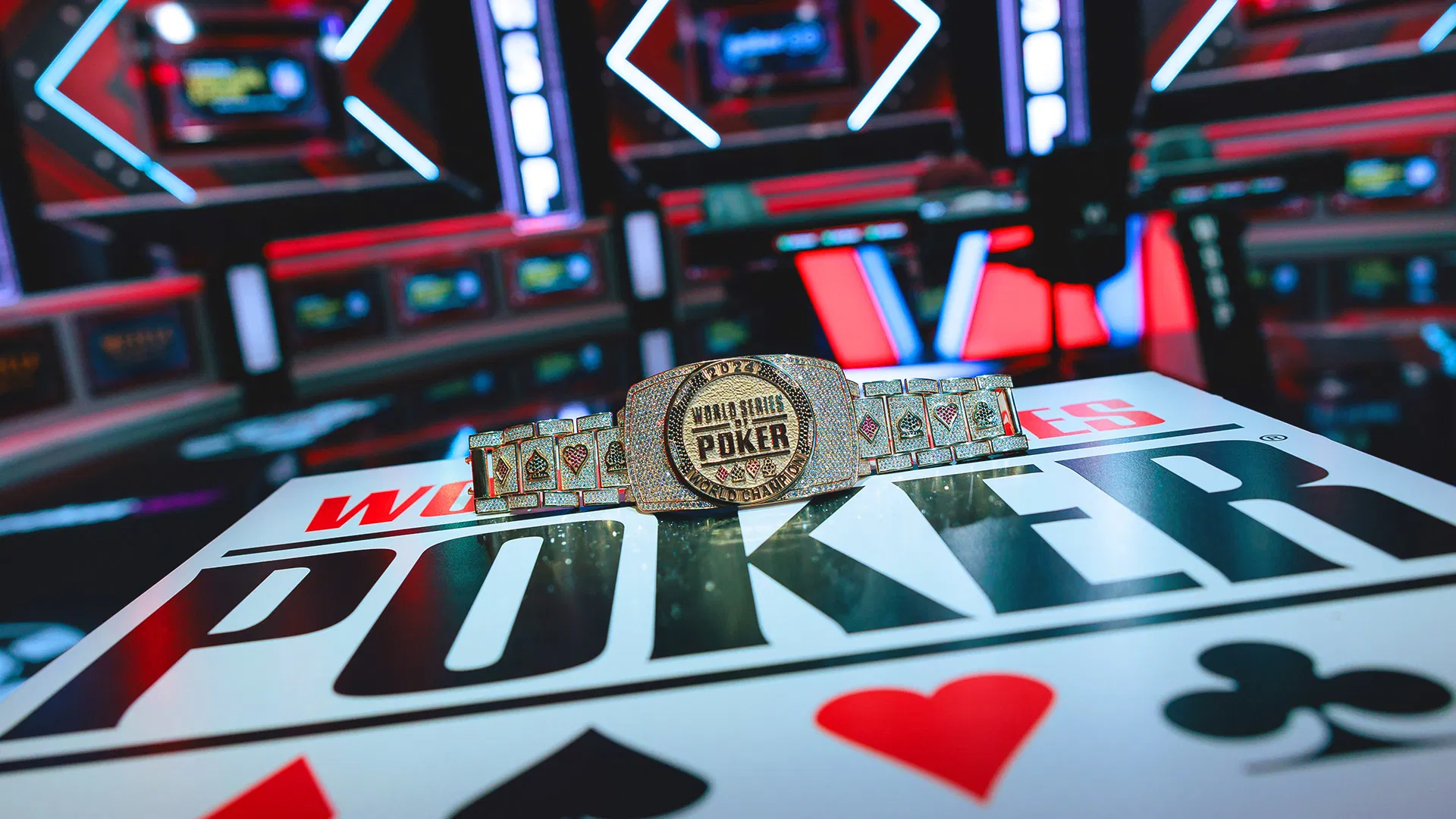
The World Series of Poker isn’t just any tournament – it’s the one everyone dreams about. Each year, thousands of hopefuls take their shot, crowding into Las Vegas to chase prize money and, more importantly, those legendary WSOP gold bracelets. This tradition goes all the way back to 1968, and except for 2020 – when the pandemic put everything on hold – it’s never missed a year.
Winning a WSOP bracelet? That’s the real badge of honor. Stack up a few, and suddenly you’re climbing the ranks in poker’s unofficial pecking order. But the Main Event winner – yeah, that’s the one everyone calls the world champ.
The series lasts more than a month and includes dozens of tournaments with total prize pools in the hundreds of millions. The Main Event – with its $10,000 buy-in – stands apart as the crown jewel of the schedule and offers the biggest first-place payout.
The winner of the WSOP ME is recognized as the overall champion and the “world champion” of poker.
How the World Series of Poker Began
The story of the WSOP really starts way back in 1951. Picture this: at The Horseshoe casino in Vegas, Nick “the Greek” Dandolos and Johnny Moss went head-to-head in a poker showdown that dragged on for nearly five months. People packed in to watch fortunes fly across the table. When it finally ended, Moss walked away the winner.
Fast forward to 1970. Vic Vickrey and Tom Moore decided to round up some of Texas’s biggest gamblers for a week of poker in Las Vegas. At the end, the group voted – literally voted – on who played best. Once again, Johnny Moss took the crown as world poker champ.
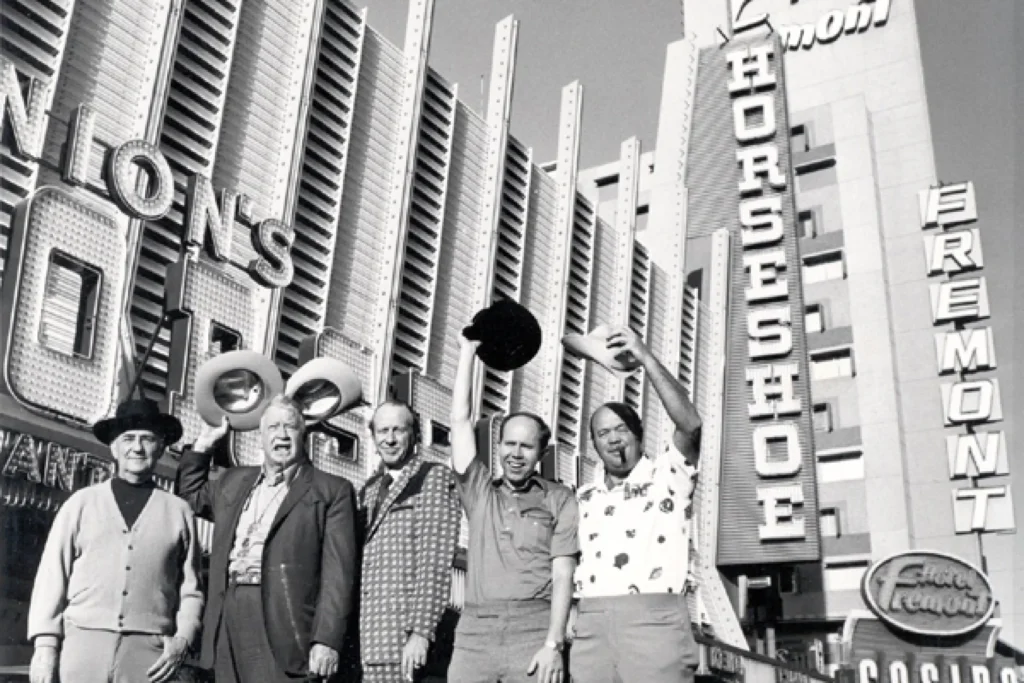
Starting from the following year, the event received official status and slowly evolved into the large-scale festival it is today. It’s worth noting that Moss claimed the official championship title again in 1971.
Poker people love to talk about the “two eras” of the World Series of Poker. Before 2003, it was this tight little club – pros, regulars, maybe a hundred players.
Everyone knew everyone’s name. It felt cozy, almost secret. Then came Chris Moneymaker. Here’s this accountant from Georgia, qualifying online for peanuts, and suddenly he wins the Main Event. No one saw it coming. His win sent a shockwave through the game.
Suddenly, poker exploded. Online sites packed with new players, the WSOP ballooned into a giant festival. PokerStars, the site that launched Moneymaker, shot straight to the top of the industry. And the WSOP? It went from a pros-only showdown to a massive, wild event packed with thousands of dreamers, all chasing their own Moneymaker moment.
A year later, in 2004, the WSOP rolled out the Player of the Year award. It’s all about racking up points based on your finishes, but the rules shift every year. Not every event counts, either. The 2011 series was a little different – every open event gave out POY points, unless it was one of the special tournaments just for seniors, women, or casino staff.
WSOP Bracelets
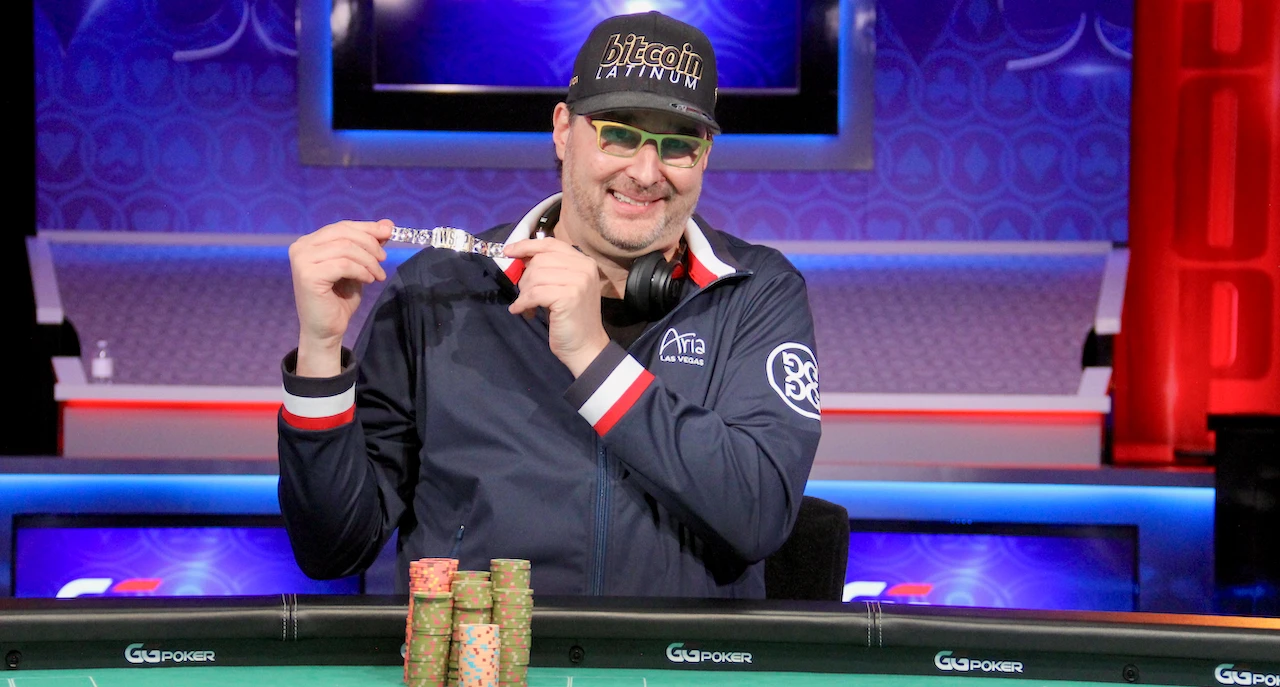
Let’s talk about what really matters: bracelets. The World Series takes over the Rio in Las Vegas every summer for more than a month, with over 60 tournaments in every major poker format you can imagine. Prize pools? They’re gigantic – more than $225 million on the line. Each event hands out a gold bracelet, and in poker, that’s the ultimate badge of honor. Ask anyone who’s serious about the game: bracelet count is the scoreboard for greatness.
Naturally, there’s this unofficial race among the greats to collect the most bracelets. Phil Hellmuth, love him or hate him, is way out in front with 16. Some other legends are chasing, but nobody’s really close. Here's the list:
|
Player |
Actual WSOP bracelet count |
|
Phil Ivey |
11 |
|
Erik Seidel |
10 |
|
Doyle Brunson |
10 |
|
Johnny Chan |
10 |
|
Johnny Moss |
9 |
|
Billy Baxter |
7 |
|
Daniel Negreanu |
7 |
By the way, in 2015 Daniel Negreanu had a great shot at making a run for the Main Event bracelet, but luck wasn’t on his side – he finished 11th, the same result he had back in 2001.
WSOP Records and Poker Legends
The World Series has seen plenty of records – achievements that will be incredibly hard to beat. Here are just a few:
- The richest WSOP Main Event win ever. Daniel Weinman’s 2023 victory paid $12.1 million, breaking Jamie Gold’s long-standing 2006 record.
- The biggest single payout in WSOP history. Antonio Esfandiari’s $18.3 million score in the 2012 Big One for One Drop still stands as the all-time WSOP money milestone.
- Youngest bracelet winner ever. Steve Billirakis captured gold at just 21 years and 10 days old back in 2007.
- Oldest WSOP bracelet champion. Farhintaj Bonyadi made history at 83 years old, winning the 2018 Super Seniors event.
- Daniel Negreanu’s unmatched double. “Kid Poker” remains the only player to win WSOP Player of the Year twice – 2004 and 2013.
- Largest Main Event field of all time. The 2023 WSOP Main Event shattered records with 10,043 entries.
- The first-ever WSOP Main Event champion. Johnny Moss took the 1970 title – not by playing cards, but by player vote.
- The Moneymaker Effect that changed poker forever. A $39 online satellite turned Chris Moneymaker into the 2003 champion and launched the global poker boom.
- The 100-year-old legend. A centenarian entered the 2023 Main Event, becoming the oldest person to ever play the championship.
- Doyle Brunson’s back-to-back miracle hand. Back in the days, “Texas Dolly” won the 1976 and 1977 Main Events with the exact same final hand: T-2 offsuit.
Although the Main Event gets all the attention, the WSOP is much more than that. The schedule includes tournaments in every major poker variant – from Omaha Hi-Lo to Seven Card Stud and mixed games like H.O.R.S.E. Some of these formats attract a very specific group of specialists, and winning a bracelet in a mixed-game event is considered a sign of true all-around skill. For many pros, these events are even more meaningful than the Main.
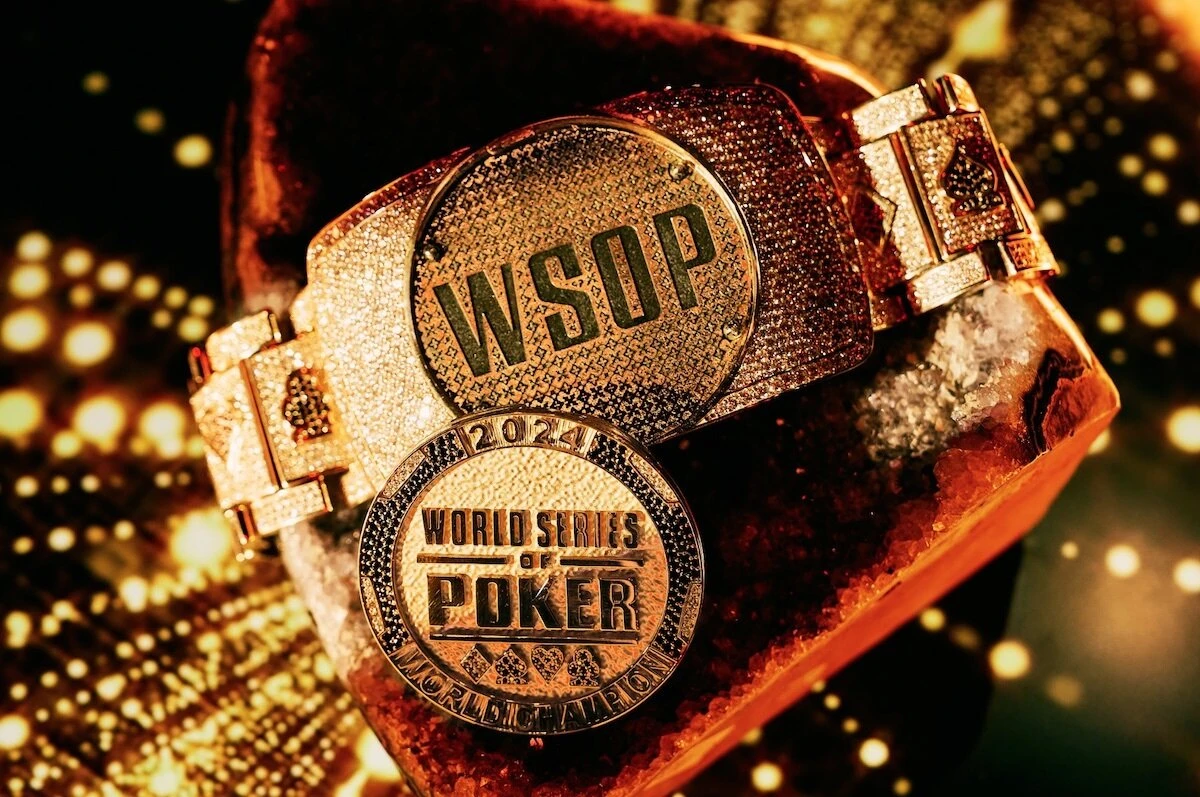
Now let’s talk about some true WSOP legends – the kind of players who turned poker into what it is today.
- First up, Johnny Moss. The guy was there at the very start, basically one of the founding fathers of pro poker. He didn’t just play – he won the very first WSOP, and then went on to take home the title three times.
- Stu Ungar comes next. Another three-time champ, but what really sets him apart is his insane natural talent. People still say nobody played like him. His life was wild enough to inspire the movie High Roller.
- Then there’s Chris Moneymaker. Just a regular accountant – at least, that’s what everyone thought – who turned a $39 online qualifier into a $2.5 million win in 2003. Seriously, this guy’s story kicked off the whole “Moneymaker Effect” and made poker explode around the world.
- Annette Obrestad? She’s the youngest to ever win a bracelet. Only 19 when she did it. That’s not just impressive; it’s kind of unreal.
- And you can’t leave out Johnny Chan. Ten bracelets. Back-to-back Main Event wins in ’87 and ’88. He helped push poker out of the smoky back rooms and onto the global stage.
Who Plays the WSOP and What It Looks Like Today?
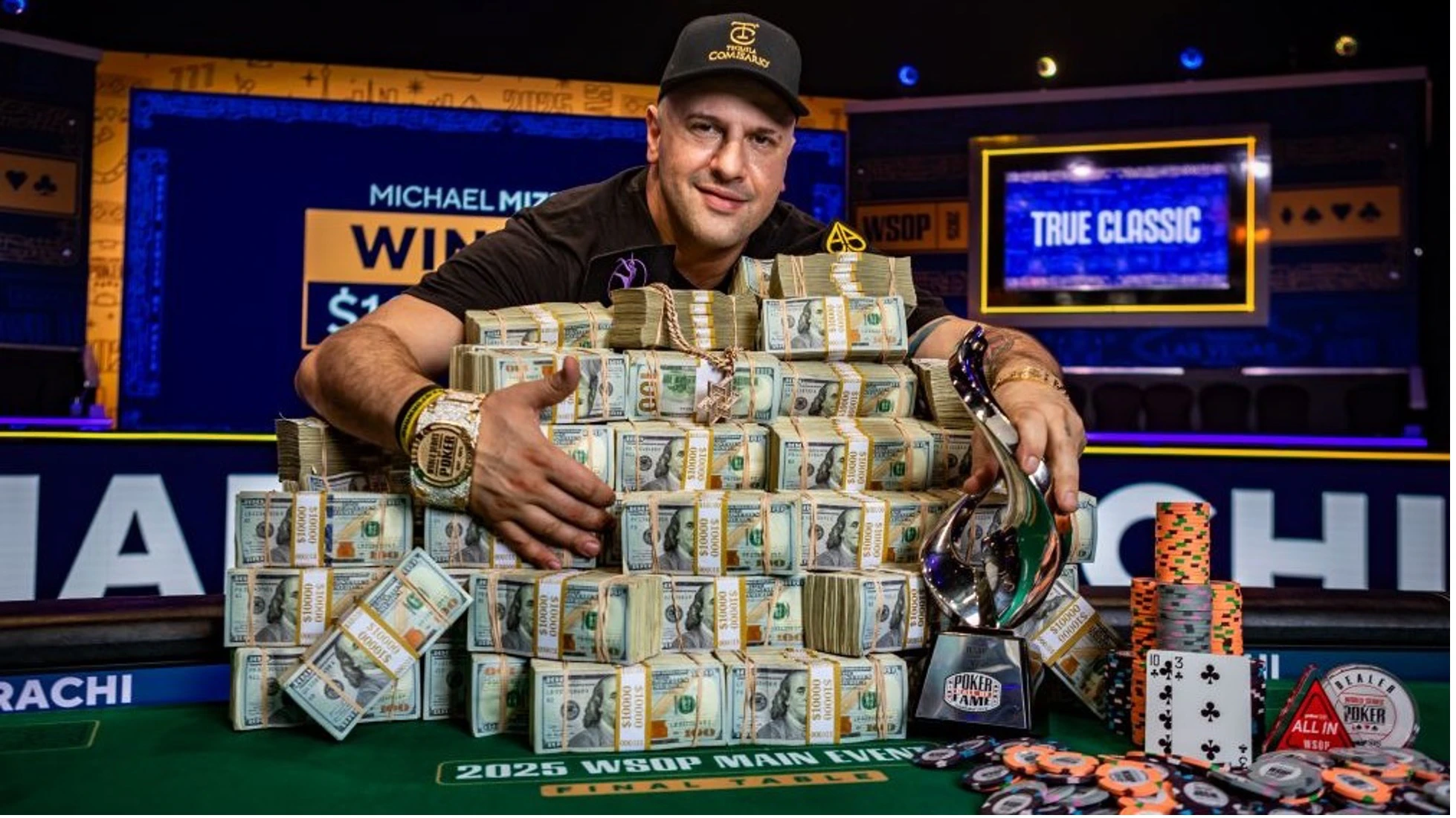
One of the things that makes the WSOP unique is the mix of players. You’ll see high-stakes regulars sitting next to retirees playing their first live event, online grinders taking their shot, and amateurs who qualified through $10 satellites. That blend creates unforgettable storylines every year – someone you’ve never heard of can suddenly become the star of the series after a deep run.
At the World Championship, most events feature buy-ins in the $1,000–$5,000 range, while the Main Event holds steady at $10,000. Some tournaments require significantly larger buy-ins. While the bulk of the action takes place in Las Vegas, part of the series now travels to various locations across Europe and Asia.
The WSOP’s popularity has skyrocketed over the decades, bringing with it explosive growth in field sizes – and prize pools:
- 1971: 6 players, winner earned $30,000
- 1982: 104 players, winner earned $520,000
- 1991: 215 players, winner earned $1,000,000
- 2006: 8,773 players, winner earned $12,000,000
- 2019: 8,569 players, winner earned $10,000,000
- 2022: 8,663 players, winner got $10,000,000
- 2023: 10,043 players, winner got $12,100,000
- 2024: 10,112 players, winner got $10,000,000
Closing Words
Every poker player has their own set of goals they want to chase. For some, the game is purely about making money – trophies and cups barely matter. Others keep a personal “hall of fame” filled with memorable prizes. But most players, especially early in their careers, share the same dream: to make it to the World Series of Poker (WSOP). It’s the biggest tournament festival in the world and is often compared to a world championship in any other sport. The fields are packed with amateur players, and first-place prizes regularly reach hundreds of thousands or even millions of dollars.
World Series of Poker is the UFC of the poker world – the most prestigious tournament series the game has to offer. Winning a WSOP title is the poker equivalent of taking home Olympic gold: it’s a moment that immortalizes your name in the history of the game.
The WSOP is not just about money or trophies – it’s about legacy. Even players who have been around for decades continue to show up every summer because the series offers something no other event can: a chance to write your name into poker history. And every year, new generations of players arrive with the same dream in their eyes – to win a bracelet and hear the applause as their picture is taken for the winners’ gallery.
Leave your comment

Guest
Comments
 Getcoach
There are no comments here yet, you can be the first!